
sharing the journey of Relationship, Embodiment, and Awakened Living
sharing the journey of Relationship, Embodiment, and Awakened Living
December 4th, 2009
When I do fall, I will be glad to go.
Jimmy Buffet, “Defying Gravity"
What do I do with my life? What do I do about this problem? How do I achieve my goals? How can I be happy?
Life has so many questions. Fortunately, there is a tool that can answer all of them, and we’re born with it. It’s our feelings. When we don’t mix them up with our thoughts, our feelings function like a GPS, telling us where to go, what to do next.
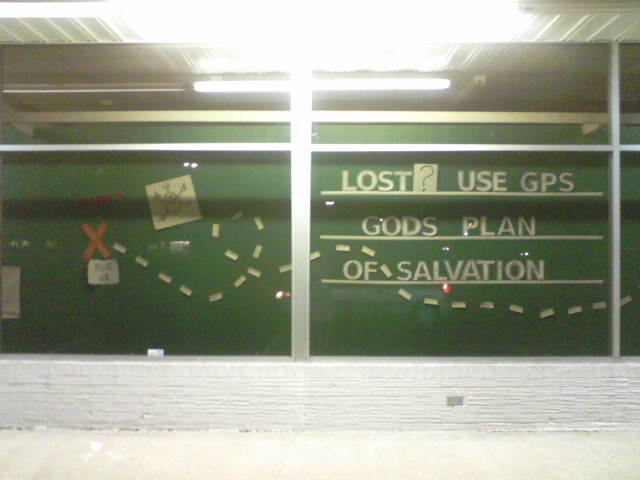 When you follow your feelings, you do whatever you feel like doing. But doing whatever you feel like doing is not the same as doing whatever you want. You don’t know what you want. Your feelings know what you really want because they are a felt sense of what’s right, of what’s appropriate in a given situation. They come from paying attention what's really going on, not just your ideas about it.
When you try to just think your way through life, you can never be sure of what you "should" do either. What you think you want to do and what you think you should do are both thoughts. Thoughts are beliefs, and beliefs can be mistaken. Feelings, on the other hand, are never mistaken.
Focusing on your feelings may sound too complicated, too confusing. It may sound too intense, too overwhelming. But trying to figure things out is what is overwhelming: there are just too many variables to consider. If you think your feelings are too much to think about or too hard to handle, you’re right. You’re not supposed to think about them. You don’t have to handle it; it’s taken care of. The GPS takes care of everything.
 Like a massive computer, this GPS takes everything you’re worried about, adds everything you’re not consciously aware of, and comes up with just one command each moment, one direction to follow. Easy. All those emotions you’re experiencing, all those things you’re concerned about, everything you care about is all wrapped up into one neat answer. “The envelope please…”
Of course, even the simplest lives involve millions of feelings, and these amount to thousands of instructions, countless “turns” along the way. Just how many of those turns we have to think about it depends on how much we trust the computer. The more we think we need to figure things out for ourselves, the more those turns can even seem like detours. But there’s nothing to worry about; there’s no need to get worked up. Just keep following your feelings, your built-in guidance system, and you’ll get there.
Following your feelings is different than doing things out of habit. Out of habit, we can easily drive along a route we've taken hundreds of times, e.g., from work to home, without thinking about it. But habit won't tell you that a child or animal is crossing the road that day. Feelings are the very opposite of habit: they keep you awake throughout the day. Our feelings are our senses, and our intuition, our "sixth sense," is one of them.
The GPS that uses all our senses watches out for children as well as traffic conditions and routes you accordingly. It has access to a million times more information than we can have conscious access to. Trying to make decisions without your felt senses is like trying to play a sport by thinking about your every move. It's like trying to do research without the internet. It's trying to live without the one thing the Buddha said is most important: awareness.
 Following one's heart puts one in touch with the deepest wellspring of authentic behavior. If you truly dive into your heart and follow it, you discover a love prior to all morality, ethics and values which is the source of appropriate action. ln the undivided heart, where there is no egoic suffering or self-interest, the roots of separation, violence, conflict, oppression, and greed do not exist. Here there is no distinction between individual action, love, and the flow of the totality.
Following your feelings may sound selfish, but it’s quite the opposite. Our feelings reach beneath the surface of our individual desires, below what we think we want, to what we really need. And what we really need is always what’s best for everyone.
How is that possible? It couldn’t be possible otherwise. That massive computer doesn’t live in your head or your heart. Your body is a receiver for that central intelligence. When we pay attention to our feelings, we are not lone individuals struggling to figure things out. We are tips of a single iceberg, all hearing the voice of a single being, Life, inside us, telling us what It wants. That voice wants what’s best for everyone because there is only One.
Marshall Rosenberg, founder of Nonviolent Communication, asserts that the only thing a human being has ever said is either “please” or “thank you.” In other words, we’re always either telling someone that we want something or telling them that we’re getting it.
We always speak– and act– from our desires. You are reading this article because you want something. And everything you have ever wanted, every desire you have ever had, stems from your needs. If we’re upset about something and letting someone know, our needs are the reason. Either our needs aren’t being met, and we’re basically ‘crying like a baby,’ or we’re satisfied and laughing like one.
Needs are central to Nonviolent Communication (or NVC) because needs are central to life. When we want something, it’s because we need something. We don’t always know what that is, but we can feel it. Uncovering our true needs, then, is immensely empowering and resolves much conflict.
Our needs, like our feelings, aren’t something we choose; life gives them to us. Like babies, the way we know whether or not our needs are being met is through our feelings. The difference is that as we grow up, we learn to either be aware of our feelings, that is, to recognize and act on them consciously and intentionally, or we learn to not be aware of our feelings, i.e., to “stuff” them. Either way, our job throughout our life remains the same: to listen to our feelings so we can fulfill our/life’s needs.
What does it mean to listen to and follow your feelings? There’s nothing obscure about it. It’s what infants do. When they need to eat, they cry or reach for food. Ideally, we react the same way. We answer to nature’s signals, our “natural impulses.”
Of course adults live much more complicated lives. We can’t just cry or grab what we want. Your computer knows that. It figures that in. It can handle that complexity. It can handle anything. It runs the universe. It runs your body. There’s no need to micromanage your life. Your digestion, heartbeat, breathing, etc. have been doing pretty well so far without any guidance from you. Your work and social life might do better with less.
To get what you really want, know your needs. To know your needs, you have to feel your feelings. And when you follow your feelings, not your thoughts, you do what’s best for everyone.
 Our feelings “surround” our needs: they are the gateway, our link to them. Without feelings, we simply can’t know what our needs are. It would be like trying to sense heat without a nervous system. Fortunately, life does not give us a need without a feeling to tell us it’s there.
Just as feelings change from moment to moment, so do our needs (i.e., which needs are and are not being met). That’s why being out of touch with your feelings means being out of touch with your needs. It’s like predicting the weather: anyone can have some idea of what the temperature is probably like on a given day, given the climate for the season. But even a weatherman can’t say with certainty what the weather will be, or even is at the moment, without actually experiencing it (or having machines measuring it for him).
The reason why what we think about our needs is barely useful is that you can’t ever “know” your needs for very long. They could be different tomorrow, or even five minutes from now. Just like the weather, our changing feelings show that variability, that unpredictability. Of course, like the weather, we have patterns. We need to eat throughout our lives. But that doesn’t mean we need to eat constantly or at certain hours. We need to eat when we are hungry, and it’s not up to us when that happens.
We are here to follow the instructions life gives us through our feelings. That is how you know your vocation, your purpose in life, as well as how to stay happy and healthy, day to day. In fact, you can’t know what to do with your life beyond what to do moment to moment. We are all following a long and winding road with no view of the destination, no way to simply name who you are and what you’re about, any more than you can say how you’re feeling once and for all. That may make life complicated, but it doesn’t make it difficult. Not when we let our on-board compass, our GPS, lead us through.
Know all and you will pardon all.
Thomas A’Kempis
Another important thing about needs in NVC is that we don’t blame people for having them. The reason they are called needs and not wants is that we don’t have any choice about them. Of course we act to meet those needs, sometimes in violent and harmful ways. But what's helpful in that case is to think, “he must be really hurting, really starved for ___________,” rather than, “he’s a bad person” or “he’s evil” — even if it’s Hitler!
Hitler, or your husband, your boss or boyfriend, your neighbor or country across the world, are never bad people out to get you who care only for themselves. They are just, like you, out to get their needs met. They are trying to heed the instructions given to them by life, or if you prefer, by God. These instructions are never just aimed at helping us to survive and to feel good as individuals. They are about doing good in the world: doing what’s best for everyone.
It is reason which breeds pride and reflection which fortifies it; reason which turns man inward into himself; reason which separates him from everything which troubles or affects him. It is philosophy which isolates a man, and prompts him to say in secret at the sight of another suffering: 'Perish if you will; I am safe.' No longer can anything but dangers to society in general disturb the tranquil sleep of the philosopher or drag him from his bed. A fellow-man may with impunity be murdered under his window, for the philosopher has only to put his hands over his ears and argue a little with himself to prevent nature, which rebels inside him, from making him identify himself with the victim of the murder. The savage man entirely lacks this admirable talent, and for want of wisdom and reason he always responds recklessly to the first promptings of human feeling.
We have a natural, innate desire to help and not hurt one another. Why? Because deep down, we know that no one is an other; they are just another part of ourselves. No hand wants to cut the other; only heads think of that. It’s only by stuffing our feelings, our guidance system, our compass-ion, that we are able to be violent, i.e., to hurt others intentionally. It’s the only reason our intuition is an "inner" voice in the first place.
Needs are never selfish because we don’t choose them. They don’t come from our ideas of what’s best for us. They come from Life itself, the whole of which we are a part. That whole cares for itself: that is, everyone and everything.
The point of Nonviolent Communication is to follow the voice of our needs so that we can “serve life.” It’s a conscience without guilt, for needs are never wrong. Following this voice is the best way to meet everyone’s needs, and that way, to make the world a better place.
Of course the instructions our feelings give us aren’t blanket, moral imperatives. Those come from humans and they do more harm than good. They cause misguided action by obscuring our awareness. Saying that anything is “bad” or “good” is saying that we know better than Life or God. It’s like saying, ‘I know the way home, so I’ll drive blindfolded.’ It’s that silly. Ignoring our needs and coming up with blanket statements about anyone, including ourselves, is that silly, that dangerous.
What does it mean to be "violent?" To be violent is to let one need dominate another: to pay attention to the needs of only some people or to only some of our own. In other words, violence can be not only between people but also inside of ourselves. If we ignore our hunger or otherwise hurt our bodies, we are being violent to ourselves. The point is to listen to all the voices inside us, all of our feelings, as well as all of the voices around us: everyone else’s feelings, and ultimately, the needs behind them.
NVC, then, is just like consensus. In consensus decision-making, not only does everyone get a vote, but everyone, not just the majority, must be satisfied with the decision. Otherwise, the majority is just forcing the minority to do what it wants, and that is violence.
Consensus doesn’t mean everyone gets what they think they want. It means everyone comes away thinking, ‘great, we’ve worked together and found the best way to accommodate everybody. I may never get what I asked for, but that’s OK. I trust the group and would rather strengthen it than have my way.’ Again, to think you know better than the whole, whether it’s a group of people or your own body, the source of your feelings, is like driving blindfolded. Believing that you have personal needs that are more important, even to you, than anyone else is like a lung wanting as much blood as it can get all to itself. That, basically, is how cancer kills. 
Whether the relationship is between two, twenty, or twenty million, or just you and yourself, two heads are better than one, and a whole body is worth 1,000 heads. Cooperation may seem elementary, but our whole modern culture of competition runs almost entirely against it. It teaches us to be selfish, i.e., individualistic. But neither consensus nor majority rule works when people are only out for themselves.
To sum up:
The main thing is to love others as yourself, that's the main thing, and it's everything, and there's no need for anything else at all. It will immediately be discovered how to set things up.
The good news is that having to consider everyone and every need every time we make a decision doesn’t make things as complicated as it may seem. In fact, it is not difficult to come up with solutions once everyone’s needs are considered. Our bodies do it every day, every minute. It works, between 30 trillion cells (and twenty times more bacteria) inside us, for about 80 years at a time. And this has been going on for millions of years. Even socially, humans have mostly gotten along. "Interpretations of the accumulated evidence available from prehistory suggest that relative nonviolence and peace prevailed for most of human prehistory" (Gregor, The Natural History of Peace).
How is that possible? Systems work when the components don’t believe themselves to be separate, independent entities. Nobody is saying “me first” or “I want it all.” Scarcity is not the problem; neither is selfishness. The problem is our concept of who we are. The problem is thinking that you and I are any less of one self than two fingers on the same body.
Loving others as yourself doesn’t mean as much as yourself. It means as part of yourself. Love is a recognition of unity. We are all in this together because we are all one. That sums up NVC in a nutshell as well as every great religion. Religion means “to bind together again.” In truth, we are never separate. We only think so. And throughout recorded history, we see the result.
They say love knows no distance. When people love each other, nothing else matters; no challenge is too great. Problems pale in comparison to the power of love. Similarly, it’s been said that anything is possible as long as it doesn't matter who gets credit for it. More to the point, anything is possible when everyone is working toward the same goal. People work toward the same goal when they love each other. When our partners, our families, our co-workers– all life on this planet, including ourselves, are all equally important to us, then solutions come easily.
People have been saying this kind of thing for millennia, and obviously it has made little difference. In fact, it has probably made things worse (see "religion" here). NVC, however, is a method, not just a message. It’s not just wishful thinking. Love is a feeling, not a belief. When we feel our own feelings, we see the truth for ourselves: our feelings for others reveal our true unity.
Like cooperation in pre-history and in our own bodies, NVC isn't just a fanciful theory; it works. In over forty years of conflict resolution, in Rwanda, Serbia, Afghanistan, and nearly sixty other countries, Marshall Rosenberg has never had a single instance of NVC not working. It has worked every time.
What does it mean to use NVC? It means to really hear the feelings and needs of everyone involved, including your own. Of course, people have to be willing to use NVC, and when they do, it can take a long time. But once people really get in touch with their feelings and needs, the solution has come quickly and easily, within minutes, every time (Steve Torma, personal communication with Rosenberg, 2009).
Nonviolent Communication is also known as Compassionate Connection. That compassion comes from following our built-in compass. Life knows what it needs. All we need to do is listen.
Ram Dass says there comes a time in our personal growth when we shift our attention "from the foreground to the background." First, we shift our attention from the parts to the whole as we see it, i.e., "from the trees to the forest." Then we shift from what we’re experiencing to how we’re experiencing it. Finally, we look beyond our experience entirely to the awareness behind it: to what’s behind our eyes and our head.
We come to see that trees which look separate above ground are connected beneath it. We see that all forests are connected. We see that all planets — everything — is part of one system, the universe, which means “the one turning.” Then every face we see is just the universe, turning, showing us a different face. We say namaste, the Hindu salutation that says, “the God in me honors the God in you.”
Salutation comes from the Latin salut, meaning health. Health, in turn, means wholeness. When you're healthy, everything fits; everything makes sense. The pieces fall together. Not only is the puzzle complete, the edges of the pieces disappear. The boundary between “me” and “you” dissolves, like drops in the ocean. Nonduality: not two; one.
Then life is no longer a nightmare. Then there are no more bad guys, no enemies, no monsters. As Paxton Robey says, “there is nothing going on but God.”
When Neem Karoli Baba died, Ram Dass finally got a chance to look in his guru’s diary. He found one word written over and over again: Ram, God. There is nothing going on but God.
Remember: don’t think; feel. It all starts with feeling your feelings. There’s a lot of words besides “God” in this article. But the minute you start feeling your feelings, you can stop reading. Use the GPS, not the ad for it.
Know the difference between feelings and emotions. Emotions are feelings plus what Eckhart Tolle calls a story: our ideas about what’s happening. Looking beyond stories is feeling: it means experiencing what is true now, what is “alive in you,” what life is saying now. You don’t have to remember what the GPS said five minutes or fifty years ago. You only have to do what it says now. It’s that simple.
In fact, it’s even simpler. For this GPS to work, you don’t tell it where you want to go. God takes care of that too. Jesus said God already knows what you want, better than you know yourself. What you want is to go home. Your GPS is permanently set for home.
Where is home? Home is with God. What is God? God is the Whole that knows it is Everything. In technical terms, God is a universe of ultimate complexity, completely differentiated and completely integrated. In simpler words, it is “unity in diversity”: knowing we are one and saying namaste to everything.
Keep in mind that what’s best for everyone is not necessarily what we would consider best for every one. Remember, it’s not about what you think you or anybody else wants. You might have to die or experience pain to serve the whole. Fortunately, our happiness in life has little or nothing to do with how things look on the surface, i.e., our circumstances. Most of our suffering comes from resisting our circumstances. When we know that serving the whole is our purpose in life, and that everyone, whether they know it or not, is trying to serve life, then any pain we endure is what Marshall Rosenberg calls “sweet pain.” The path is no less pleasurable than playing football, knowing you’re bound to get tackled a time or two on the way to the goal. Like Christ to the cross, you’re “glad to go.” You know you are going home.
If the universe is infinite, the process of coming home can go on forever. Fortunately, that journey can be a joyful one. When we know our purpose, that we have a GPS that cannot fail, and that we are always coming home, we are already there.